Illinois Tax Lien Sales
Directory with tax lien auctions, deeds, redemption periods and more
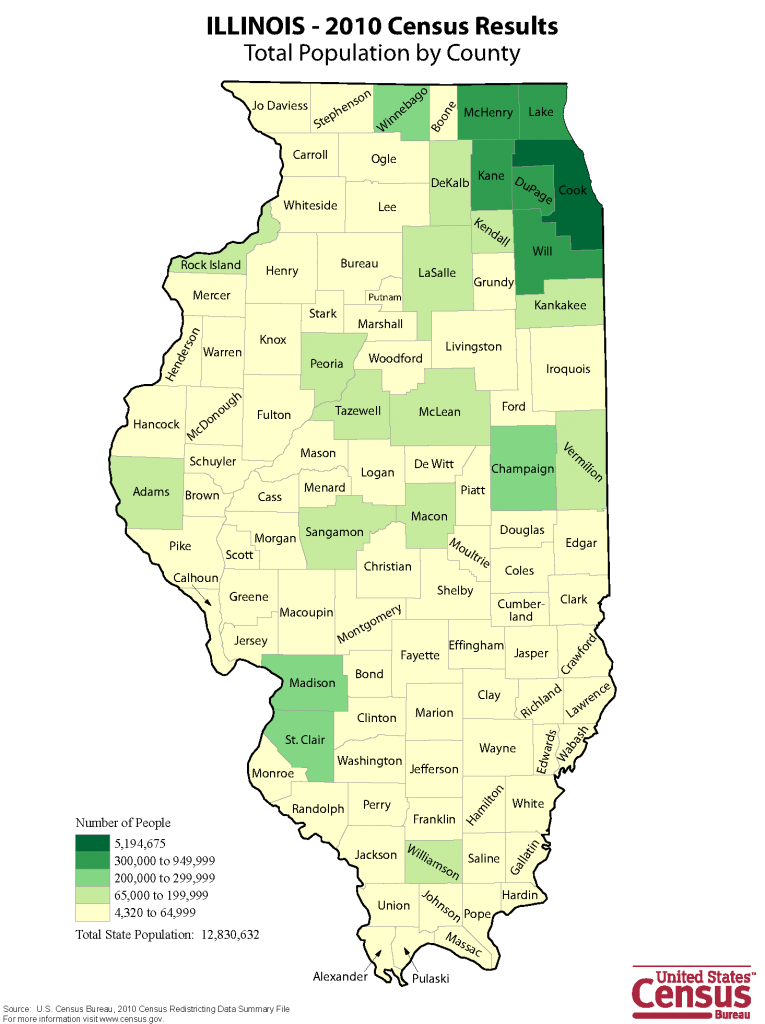
County Map
County Resources
| County | Resource | Phone | Website |
|---|
Auctions in Illinois - November 2026
Sign up for full accessTax Lien Auctions:
- Annual (Varies)
- Bid down interest
- Interest rate: 18% per annum (1.5% monthly)
- Redemption period begins with the date of auction
- 2 years on vacant land; 3 years on occupied properties
Lien State
Illinois statute establishes that: the State by virtue of its sovereignty, has a perpetual lien on all taxable lands…and that taxes on real property constitute a lien on such property beginning on the first day of April until same is paid or sold pursuant the Revenue act establishes that;…taxes upon property, together with all penalties, interests and costs that may accrue thereon, shall be prior and first lien on the property, superior to all other liens and encumbrances…
TAXES DUE & DELINQUENT:
Property taxes become delinquent on different dates in different counties, basically in two categories: those with accelerated payment schedules and those without. For category number one, the first installment becomes delinquent June 1st of any calendar year, with the second installment delinquent on September 1st. Accelerated scheduled counties with a population of 3,000,000 or less are due and/or delinquent on June 1st and August 1st. With a population of more than 3,000,000 the dates are March 1st and August 1st. The counties with accelerated schedules require taxpayers to tender an estimate of taxes due based on a 50% amount of last year’s tax when the assessment for the current year has yet to be calculated. In addition, county boards may adopt an ordinance allowing payments in four installments. In any event, the first installment cannot be considered delinquent until thirty days after the billing date. Delinquent interest accrues at the rate of 1 1/2% per month from those dates forward. They will remain delinquent for a period of approximately 1 year before being offered at tax lien auction. (Example: 2005 auctions are for 2003 tax delinquencies).
LIEN SALES:
Tax lien sales are conducted by the County Clerk annually. The format is an interest bid down process, beginning with the maximum allowable rate of 18%. The redemption period begins on the date the lien sale takes place in every instance. Most counties do require some sort of pre-registration for auction participation. Most also require payment in certified funds, usually payable before the end of the next business day. Prima facie evidence of the transfer of lien is issued in the form of a Certificate of Purchase. The maintenance of tax lien certificates in Illinois can be rather complicated. Certain filings are required at certain times by statute for the certificate holder. It is highly recommended that certificate holders retain an attorney that is familiar with these procedures. The Illinois State Bar or Illinois Lawyer Referral Service can be helpful in identifying these lawyers.
REDEMPTION:
Liens garner a 2-3-year redemption period as follows:
Owner – occupied residences:
2 years, 6 months
Other property:
2 years
Residential properties of more than 6 units:
3 years
Scavenger Sale vacant land: 6 months
In each instance, the property owner or the certificate holder has the option of petitioning for an extension of the redemption with the court. These extensions are granted for periods of 6 months.
Redemption interest is calculated as a percentage of taxes, interest, penalties, and costs paid for the purchase of a certificate as follows: This is not annualized interest. Although it is referred to as interest, it is assessed as a penalty. The redemption shall be in an amount equal to the total of the following:
The certificate amount, which shall include all tax principal, special assessments, interest and penalties paid by the tax purchaser together with costs and fees of sale and fees and the accrued penalty, computed through the date of redemption as a percentage of the certificate amount, as follows:
If the redemption occurs on or before the expiration of 6 months from the date of sale, the certificate amount times the penalty bid at sale;
If the redemption occurs after 6 months from the date of sale, and on or before the expiration of 12 months from the date of sale, the certificate amount times 2 times the penalty bid at sale;
If the redemption occurs after 12 months from the date of sale and on or before the expiration of 18 months from the date of sale, the certificate amount times 3 times the penalty bid at sale;
If the redemption occurs after 18 months from the date of sale and on or before the expiration of 24 months from the date of sale, the certificate amount times 4 times the penalty bid at sale;
If the redemption occurs after 24 months from the date of sale and on or before the expiration of 30 months from the date of sale, the certificate amount times 5 times the penalty bid at sale;
If the redemption occurs after 30 months from the date of sale and on or before the expiration of 36 months from the date of sale, the certificate amounts to 6 times the penalty bid at sale.
In the event that the property to be redeemed has been purchased over the counter, the penalty bid shall be 12% per penalty period set forth above.
After the Sale:
Every property offered at public sale, and not sold for want of bidders, shall be forfeited to the State of Illinois, as stated by Illinois statute. Counties then have the option of offering those liens in over-the-counter sales. These liens are then known as forfeited lands. Key phrase to remember! In the event of an over-the-counter purchase, the redemption interest rate is set at 12% (not negotiable). It is calculated in the same manner as those liens purchased at auction. During the redemption period the subsequent year’s taxes may become delinquent. These delinquencies are available for attachment to pre-existing liens the day after they become delinquent. Second and third years are attached at 12% per penalty period, regardless of the amount bid at auction. The penalty amount graduates in the same format as the auction penalty described above.
Special Notes:
With second year’s investments guaranteed at 12% and with the possibility of a 24% return, this would explain why some investors are willing to bid very low rates at Illinois auctions. Joseph Meyers Real Estate Company has agreements with 48 Illinois counties to purchase all liens not sold at their annual auctions. They receive the liens at 18%, take title to all not redeemed, and then hold private real estate auctions throughout the state. Some other Illinois counties employ private companies to administer their over the counter lists.
Scavenger Sale:
In addition to annual sales and over-the-counter sales (forfeited lands list), at least two counties hold Scavenger Sales (Cook & Marion) every other year. These are liens that have remained delinquent through at least two regular tax sales and for which no over-the-counter sales have taken place. They are usually held every other year in an open and competitive format with the opening bid set at $250 plus fees on every property. Redemption period is still in effect, but all other taxes, interest and penalties are eliminated.
Redemptions Scavenger Sale:
Redemptions may be made in the same manner and upon the same terms and conditions as redemptions from sales made under the county collector’s annual application for judgment and order of sale, except that in lieu of penalty the person redeeming shall pay interest on that part of the amount for which the property was sold equal to or less than the full amount of delinquent taxes, special assessments, penalties, interest, and costs, included in the judgment and order of sale as follows:
1. If redeemed within the first 2 months from the date of the sale, 3% per month upon the amount of taxes, special assessments, penalties, interest, and costs due for each of the first 2 months, or fraction thereof.
2. If redeemed at any time between 2 and 6 months from the date of the sale, 12% of the amount of taxes, special assessments, penalties, interest, and costs due.
3. If redeemed at any time between 6 and 12 months from the date of the sale, 24% of the amount of taxes, special assessments, penalties, interest, and costs due.
4. If redeemed at any time between 12 and 18 months from the date of the sale, 36% of the amount of taxes, special assessments, penalties, interest, and costs due.
5. If redeemed at any time between 18 and 24 months from the date of the sale, 48% of the amount of taxes, special assessments, penalties, interest, and costs due.
6. If redeemed after 24 months from the date of sale, the 48% provided for the 24 months together with interest at 6% per annum thereafter on the amount of taxes, special assessments, penalties, interest, and costs due.
The person redeeming shall not be required to pay any interest on any part of the amount for which the property was sold that exceeds the full amount of delinquent taxes, special assessments, penalties, interest, and costs included in the judgment and order of sale. At the end of the redemption period (regardless of method purchased) the lien holder petitions the court for tax deed. You must file these petitions within the time frames allotted in order to protect your investment. Failure to apply for tax deed at the appropriate date invalidates the lien.
Foreclosure:
In order to be entitled to a tax deed, within 5 months after any sale, the purchaser must deliver to the county clerk a notice (more commonly known as a “take notice”) to be given to the party in whose name the taxes are last assessed as shown by the most recent tax collector’s warrant books, in at least 10 point. Within 10 days after receipt of said notice, the county clerk shall mail to the addresses supplied by the purchaser or assignee, by registered or certified mail, copies of said notice to the party in whose name the taxes are last assessed as shown by the most recent tax collector’s warrant books. The purchaser or assignee shall pay to the clerk postage plus a fee. The clerk shall write or stamp the date of receiving the notices upon the copies of the notices, and retain one copy.
Petition for deed:
At any time within 5 months but not less than 3 months prior to the expiration of the redemption period for property sold pursuant to judgment and order of sale, the purchaser may file a petition in the circuit court in the same proceeding in which the judgment and order of sale were entered,asking that the court direct the county clerk to issue a tax deed if the property is not redeemed from the sale. The petition shall be accompanied by the statutory filing fee. The county clerk shall be notified of the filing of the petition and any person owning or interested in the property may, if he or she desires, appear in the proceeding.
Issuance of deed:
If the redemption period expires and the property has not been redeemed and all taxes and special assessments which became due and payable subsequent to the sale have been paid and all forfeitures and sales which occur subsequent to the sale have been redeemed and the notices required by law have been given and the petitioner has complied with all the provisions of law entitling him or her to a deed, the court shall so find and shall enter an order directing the county clerk on the production of the certificate of purchase and a certified copy of the order, to issue to the purchaser or his or her assignee, a tax deed. Upon application the court shall enter an order to place the tax deed grantee in possession of the property and may enter orders and grant relief as may be necessary or desirable to maintain the grantee in possession. Tax deeds issued are incontestable except by appeal from the order of the court directing the county clerk to issue the tax deed. Illinois tax deed statutes are liberally construed so that tax deeds convey merchantable title. Unless the holder of the certificate purchased at any tax sale takes out the deed in the time provided by law, and records the same within one year from and after the time for redemption expires, the certificate or deed, and the sale on which it is based shall, after the expiration of the one year period, be absolutely void with no right to reimburse.
Illinois is unique in that it holds two types of tax sales: Regular tax lien certificate sales and Scavenger tax sales.
Regular tax sales consist of properties which were delinquent the previous year. Bidding begins at 18% and tax lien certificates are sold to the bidders willing to accept the lowest rate. The property owner has up to three years to exercise his or her right to redeem the property.
Scavenger Tax Sales consist of properties which were delinquent for two or more years. According to (Sec. 21-260) the ‘minimum bid for any property shall be $250 or one-half of the tax if the total liability is less than $500.’
Tax Sale Type: Tax Lien Certificates (Sec. 21-240)
Contact: Tax Collector (Sec. 21-110)
Interest Rate: None
Penalty Rate: 18% (Sec. 21-215)
Bid Procedure: Bid Down (Sec. 21-215) and the highest/greatest bid (for Scavenger tax sales) (Sec. 21-260)
Redemption Period: Two (2) years or (3) years (Sec. 21-350) Law: Illinois Compiled Statutes, Chapter 35, Title 7, “Tax Collection” (35 ILCS 200/21-5 et seq.)
Streamline Your Tax Lien Research
Access comprehensive tax lien and deed sale lists across all U.S. counties.