North Carolina Tax Lien Sales
Directory with tax lien auctions, deeds, redemption periods and more
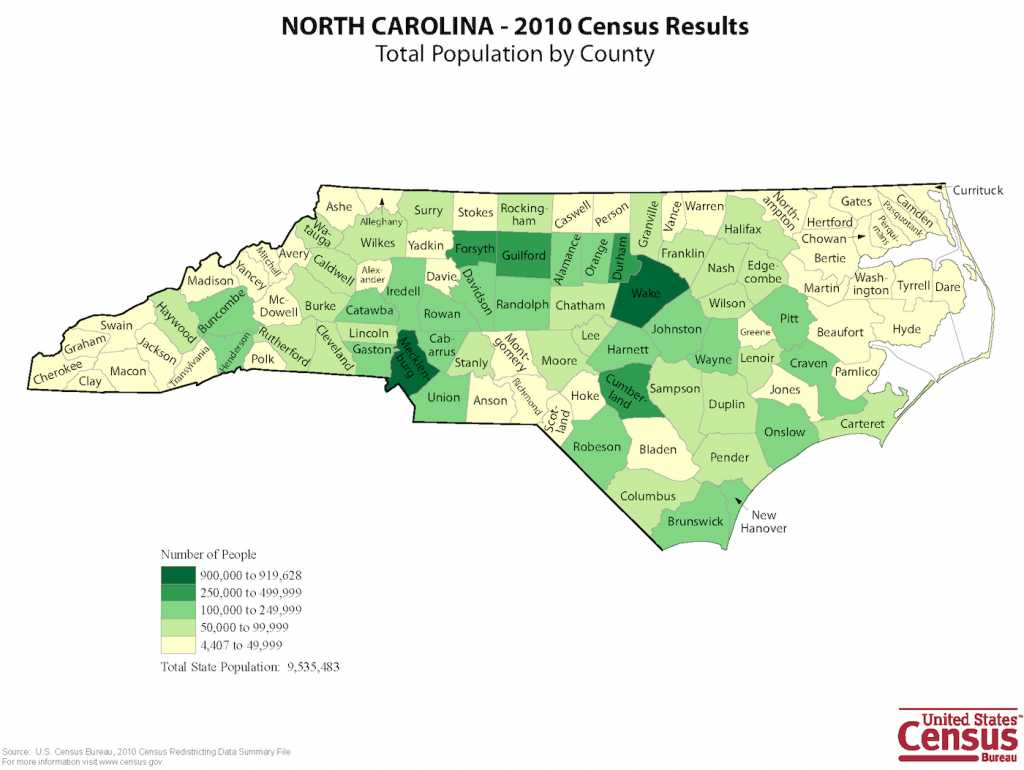
County Map
County Resources
| County | Resource | Phone | Website |
|---|
Auctions in North Carolina - November 2026
Sign up for full accessTax Lien Auctions:
- Annual (Varies)
- Premium Bid
Deed State
Taxes Due & Delinquent:
North Carolina statute establishes that the lien for taxes levied on a parcel of real property shall attach to that real property on the first day of the fiscal year (July 1st) of each year property taxes are levied. The lien for property taxes imposed is superior to all other liens, assessments, charges, rights and claims of any and every kind against the property so levied, regardless of the claimant and regardless of whether that real property was acquired prior to, or subsequent to the attachment of the lien for taxes, subject only to State tax liens. This same citation goes on to say that the priority of the lien for taxes shall not be affected by transfer of title after the lien has attached, nor shall it be affected by the death, receivership, or bankruptcy of the owner. North Carolina property taxes are due and payable on September 1st of each year, for that fiscal year’s (July 1-June 30) assessment. They are considered delinquent if not paid by the following January 6th. The governing body of each county is granted the authority to establish discounts for payments made before the delinquency date of January 6th. Unpaid taxes between Jan 6th and Feb. 1st accrue a 2% penalty. After Feb. 1st, interest accrues at the rate of 3/4% per month, or fraction thereof calculated against the aggregate sum of taxes plus penalty.
Tax Deed Sales:
County and Municipal tax collectors then advertise (via a publication of general circulation within the jurisdiction, or by public notice) liens on properties for which tax remains unpaid during the period of March 1st through June 30th. This advertisement contains a statement that the taxing unit may foreclose the tax liens and sell the real property in satisfaction of its claim for taxes. After these obligations are meant there are two methods by which to proceed to bring property to tax sale, in order to satisfy the delinquent taxes.
Method Number One:
After the mandated notice is completed, the taxing unit shall proceed with a foreclosure action in the appropriate division of the General Court of Justice. The foreclosure action will mandate the notification of all interested parties and allow them time to respond. In addition, the taxing unit is required to include a general allegation of subsequent taxes due in their complaint of foreclosure. Any judgment rendered in favor of the taxing unit is required by statute to include an order for sale of the real property cited in the action. The judgment will appoint a commissioner to conduct the sale and shall order the property sold in fee simple, free and clear of all interests, rights claims and liens, subject only to those liens for taxes not identified in the foreclosure action.
The sale shall be by public auction to the highest bidder and shall be held at the courthouse, city or town hall door on any day except Sunday or legal holiday. The opening bid will equal the amount of all taxes, interest, penalties, and court costs due as set forth in the judgment. The successful bidder at the time of sale will be required to submit a deposit. Statute mandates that the deposit cannot exceed 20% of the proposed purchase price. Within three days of the foreclosure sale, the commissioner is required to report the outcome of the sale to the court. Persons having an interest in the real property sold at auction have 10 days from the date said report is submitted to file exceptions to the sale with the court. In addition, increased bids and/or redemptions may also be accepted by the court during this same 10-day period. A bid tendered under this procedure is known as an upset bid. If an upset bid is placed, the property must be re-advertised for an additional two weeks, and another sale held. At this sale, the opening bid would equal the amount of the upset bid. If no exceptions or increased bids (upset bids) are tendered, or if the court has denied all exceptions filed, and the 10-day redemption period has elapsed, the commissioner will apply to the court for judgment of conformation. The judgment of conformation shall direct the commissioner to deliver the deed upon payment of the balance due of the purchase price.
Unsold Properties:
Properties not sold at sale will be purchased by any one or combination of the taxing units involved in the foreclosure action. This process is known as “bids in” by the taxing jurisdictions. County or Municipally owned property may then be purchased via private sale for an amount not less than the amount paid by the taxing district. Properties held in the taxing jurisdictions inventory are commonly referred to as resale properties.
Method Number Two:
In contrast to the judicial foreclosure method described above, there is another method afforded taxing jurisdictions for the collection of delinquent property tax. This procedure is known as Docketing Certificate of Taxes as Judgment. In lieu of filing a court action, and after six months has expired since the advertisement of tax liens (March 1- June 30) the tax collector may file with the clerk of the Superior Court a certificate stating statutorily-mandated information about the property to sold. This procedure is known as indexing the judgment. The tax collector is also responsible for notification of all interested parties. The notification must state, among other things, that the judgment will be docketed, and the execution will be issued thereon in the manner provided by law. The effect of the Docketing Certificate of taxes due shall constitute a valid judgment against the real property. The judgment shall have the same force and effect as a duly rendered judgment of the superior court directing the sale of the property for satisfaction of the tax lien. At any time after six months and before two years from the date of the indexing of judgment, the tax collector may request from the clerk of the court that an execution be issued. The execution shall order the real property sold at public auction by the sheriff in the same manner as previously described for judicial sales, including the opportunity for upset bids. The purchaser at the execution sale shall acquire title to the property in fee simple, free and clear of all claims, rights, interests, and liens except the liens for other taxes. Properties not sold at auction are held for resale in the same manner as described in the judicial foreclosure sale process. As in many other states, challenges to either of the above processes may only be filed within one year of the deed issuance/recording. Larger, more metropolitan counties tend to use the second (simpler / less expensive) method more often than the smaller, less metropolitan counties. They prefer the judicial method. Of course, the judicial method can also be more time consuming, given the speed with which local courts process anything.
In North Carolina, the tax collector or treasurer will sell tax deeds to the winning bidders at the delinquent property tax sale.
Tax Sale Type: Tax Deeds (Sec. 105-374 (p))
Contact: County Tax Collector (Sec. 105-350)
Bid Procedure: Premium Bid (Sec. 105-374 (m)) Law: General Statutes of North Carolina, Chapter 105, Subchapter II, Article 26, “Collection and Foreclosure of Taxes.”
Additional Notes:
Upset bids: According to (Sec. 1-339.64) a bidder may ‘increase the bid’ by increasing the bid by ‘(5%)’ and ‘with a minimum increase of seven hundred fifty dollars ($750.00)’. Once the upset bid has been recorded, the clerk of the Superior Court will release the prior sale.
Counties / Municipalities located in North Carolina
The following is a list of counties located in the state of North Carolina. Tax Deeds for properties located in the following counties are sold at North Carolina county tax sales. Learn more about each county’s individual tax sale process by clicking on the name of the county for which you are interested from the list below:
| County/Municipality | Population |
|---|---|
| Alamance County, NC | 130.800 |
| Alexander County, NC | 33.603 |
| Alleghany County, NC | 10.677 |
| Anson County, NC | 25.275 |
| Ashe County, NC | 24.384 |
| Avery County, NC | 17.167 |
| Beaufort County, NC | 44.958 |
| Bertie County, NC | 19.773 |
| Bladen County, NC | 32.278 |
| Brunswick County, NC | 73.143 |
| Buncombe County, NC | 206.330 |
| Burke County, NC | 89.148 |
| Cabarrus County, NC | 131.063 |
| Caldwell County, NC | 77.415 |
| Camden County, NC | 6.885 |
| Carteret County, NC | 59.383 |
| Caswell County, NC | 23.501 |
| Catawba County, NC | 141.685 |
| Chatham County, NC | 49.329 |
| Cherokee County, NC | 24.298 |
| Chowan County, NC | 14.526 |
| Clay County, NC | 8.775 |
| Cleveland County, NC | 96.287 |
| Columbus County, NC | 54.749 |
| Craven County, NC | 91.436 |
| Cumberland County, NC | 302.963 |
| Currituck County, NC | 18.190 |
| Dare County, NC | 29.967 |
| Davidson County, NC | 147.246 |
| Davie County, NC | 34.835 |
| Duplin County, NC | 49.063 |
| Durham County, NC | 223.314 |
| Edgecombe County, NC | 55.606 |
| Forsyth County, NC | 306.067 |
| Franklin County, NC | 47.260 |
| Gaston County, NC | 190.365 |
| Gates County, NC | 10.516 |
| Graham County, NC | 7.993 |
| Granville County, NC | 48.498 |
| Greene County, NC | 18.974 |
| Guilford County, NC | 421.048 |
| Halifax County, NC | 57.370 |
| Harnett County, NC | 91.025 |
| Haywood County, NC | 54.033 |
| Henderson County, NC | 89.173 |
| Hertford County, NC | 22.601 |
| Hoke County, NC | 33.646 |
| Hyde County, NC | 5.826 |
| Iredell County, NC | 122.660 |
| Jackson County, NC | 33.121 |
| Johnston County, NC | 121.965 |
| Jones County, NC | 10.381 |
| Lee County, NC | 49.040 |
| Lenoir County, NC | 59.648 |
| Lincoln County, NC | 63.780 |
| Macon County, NC | 29.811 |
| Madison County, NC | 19.635 |
| Martin County, NC | 25.593 |
| Mcdowell County, NC | 42.151 |
| Mecklenburg County, NC | 695.454 |
| Mitchell County, NC | 15.687 |
| Montgomery County, NC | 26.822 |
| Moore County, NC | 74.769 |
| Nash County, NC | 87.420 |
| New Hanover County, NC | 160.307 |
| Northampton County, NC | 22.086 |
| Onslow County, NC | 150.355 |
| Orange County, NC | 118.227 |
| Pamlico County, NC | 12.934 |
| Pasquotank County, NC | 34.897 |
| Pender County, NC | 41.082 |
| Perquimans County, NC | 11.368 |
| Person County, NC | 35.623 |
| Pitt County, NC | 133.798 |
| Polk County, NC | 18.324 |
| Randolph County, NC | 130.454 |
| Richmond County, NC | 46.564 |
| Robeson County, NC | 123.339 |
| Rockingham County, NC | 91.928 |
| Rowan County, NC | 130.340 |
| Rutherford County, NC | 62.899 |
| Sampson County, NC | 60.161 |
| Scotland County, NC | 35.998 |
| Stanly County, NC | 58.100 |
| Stokes County, NC | 44.711 |
| Surry County, NC | 71.219 |
| Swain County, NC | 12.968 |
| Transylvania County, NC | 29.334 |
| Tyrrell County, NC | 4.149 |
| Union County, NC | 123.677 |
| Vance County, NC | 42.954 |
| Wake County, NC | 627.846 |
| Warren County, NC | 19.972 |
| Washington County, NC | 13.723 |
| Watauga County, NC | 42.695 |
| Wayne County, NC | 113.329 |
| Wilkes County, NC | 65.632 |
| Wilson County, NC | 73.814 |
| Yadkin County, NC | 36.348 |
| Yancey County, NC | 17.774 |
Streamline Your Tax Lien Research
Access comprehensive tax lien and deed sale lists across all U.S. counties.